
Willaston and the northern side of Gawler
Plenty of yards here sit lower than the street, the neighbour, or both. We set the levels and the drainage first, then build the yard that goes on top.
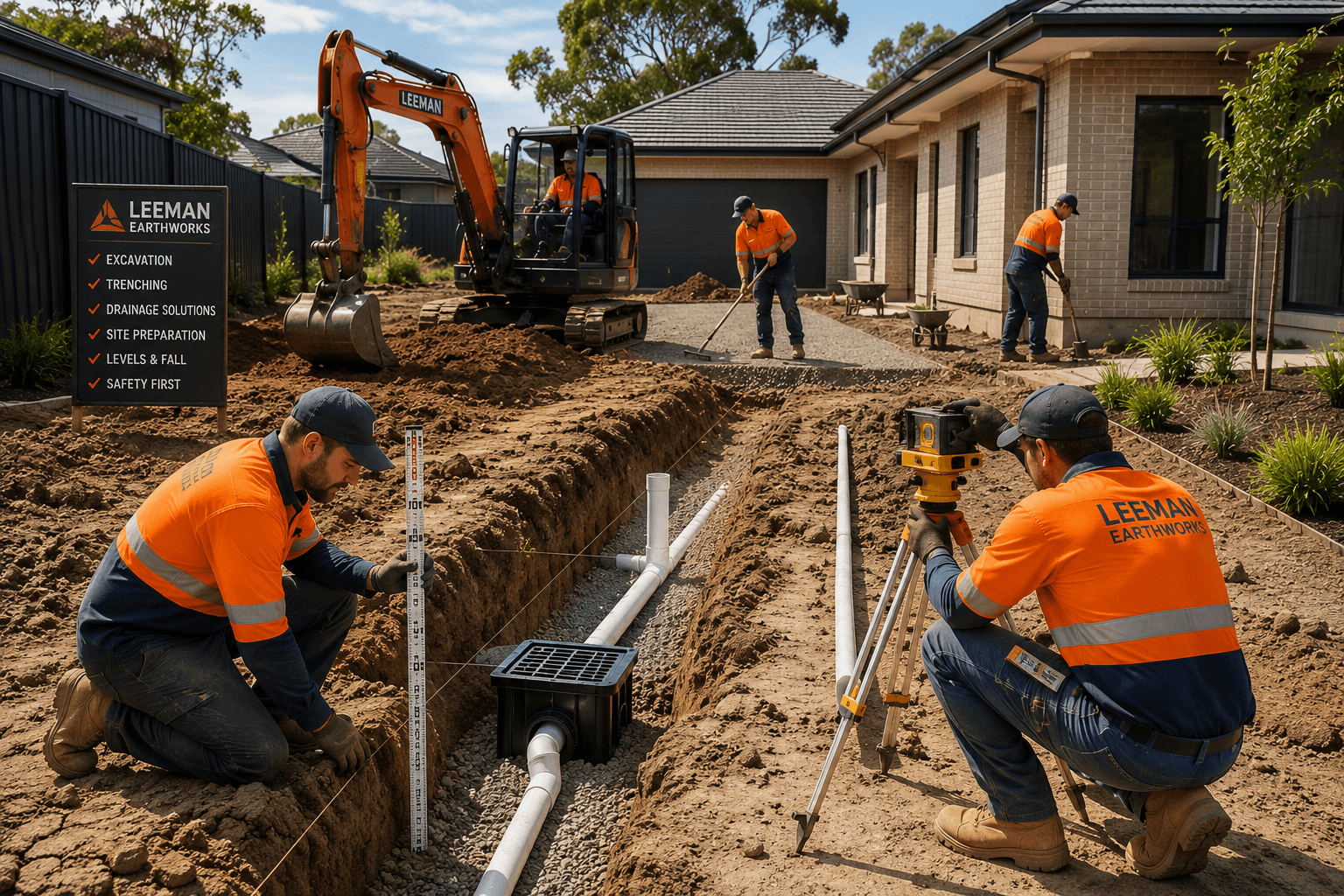
One team for the groundwork and the finish. On a low block those two are really the same job, because every surface you lay has to send water somewhere.
Heights taken across the whole block first, then a decision on what gets cut, what gets built up and what height everything else is set to.
Ag line, grated drains and stormwater runs put in where water actually collects rather than where it looks tidy.
Low walls that hold a built up level in place, and taller walls where ground steps down to a boundary.
Paths, patios and driveways laid with fall built into them, so they shed water instead of holding it.
Lawn on ground that has been graded first, watered to suit a yard that already stays damp in places.
Boundary and dividing fences on long narrow yards, set out so a gate still lets a machine through.
Old fill and cut material carted off, or kept on site where a level needs raising.
Willaston is an older part of town on ground that does not have much tilt to it. Water is not fussed about fence lines. It moves downhill until it reaches the first place that is flat, and on a lot of blocks around here that place is the middle of the back yard. The usual signs:
The first job is knowing the heights instead of guessing them. We take levels across the block and work out how much drop there really is between the house, the yard and the point where water is allowed to leave. Sometimes there is more to work with than it looks. Sometimes there is next to none, and the answer is to lift the yard rather than dig into it.
Where a drop exists but is too slight to shift water on its own, a shallow drain does the work instead. A grated line across the low side, ag line behind a wall, or a spoon drain beside a path all move water at a grade you would never feel underfoot.
More on the thinking behind it in our note on why drainage comes first on an Adelaide block.
Flat ground is not a reason to give up on drainage. It changes the method.
On a low block, digging deeper only makes a bigger dish. Bringing material in and lifting the surface gives you the height to run water off, and it keeps the finished level clear of the damp ground underneath. Raised beds do the same thing for planting. Once soil sits above the wet line, roots are not sitting in water every winter. The catch is that fill has to be compacted in layers, because loose material keeps dropping for months and takes the paving or the turf down with it.
A pit filled with rubble only works if the ground around it can take water away. Where the ground holds water, the pit fills, stays full, and the yard is no better off than it was. It earns its place where there is somewhere for water to go. Otherwise the water has to be piped off the block instead of parked in a hole and forgotten about. Our guide to backyard drainage on heavy ground goes further into the options.
Runoff arriving from a higher yard next door comes up often. You cannot re-grade someone else's block, so the work happens on your side of the fence. A cut off drain along the boundary, a raised edge, or a level change that turns the flow and sends it past the part of the yard you actually use. Worth sorting before the lawn goes in rather than after.
This all sits inside the wider landscaping services we run, so the drainage work and the finished yard are quoted and built together rather than as two visits.
Older township blocks and the newer homes among them start from very different places, and the plan follows the block rather than a formula.
An established block can run a long way back off a narrow frontage. The length is the opportunity and the headache at the same time.
Where the ground drops away from the street, the yard behind the house becomes the collecting point for whatever sits above it.
Raise part of a yard and something has to hold the edge of it. That is what most of the wall work on a low block is for. Not a deep cut into a slope, but a low wall keeping built up ground where you put it, with drainage behind so water is not building up against the back of it.
The same crew handles the earthworks and the landscaping, which is the whole point of doing it this way. No half finished level gets handed to somebody else to build on, and no one is guessing what is under the surface.
Our site preparation checklist covers what gets looked at before a machine turns up, which on a low block is mostly heights, outlets and where the services run.
Five stages, starting with the heights and finishing with the planting.
We walk the block and measure, so the conversation starts with what the ground is doing rather than a guess.
A layout for the yard, with groundwork, drainage and finishes priced as separate lines.
Fall cut or built in, drain lines laid, and any fill compacted in layers as it goes down.
Retaining, edging, paving and fencing go on once the levels underneath are signed off.
Beds built up, turf laid, irrigation set, and the leftover material carted off the block.
Our plant runs out of Mannum and Waterloo Corner, which puts Willaston and the towns around Gawler inside standard coverage. Areas we get to regularly:
The same crew covers landscaping in Gawler across the town centre and landscaping in Gawler East on the higher ground, along with landscaping in Roseworthy further north. If your block is somewhere not listed, ring 0483 905 611 and tell us where it is.
We do. Willaston is a short run from the rest of the northern work we take on, and we bring our own machines and operators instead of hiring plant in.
Usually. There are two ways to deal with it. Build the yard up so it has somewhere to drain to, or put in a drain line that carries water off the block. Which one suits comes down to the heights we take on the day.
The work has to happen on your side of the fence. A cut off drain along the boundary, a raised edge or a change of level will turn the flow and keep it away from the part of the yard you use.
Only where the ground under it can take water away. On ground that holds water, a pit fills up and stays full, and the lawn is no better off. In that case the water needs a pipe to somewhere it can leave.
On a low block the levels and the drainage take up the front part of the job, and the yard can look worse before it looks better. We give you a timeframe with the quote so you know how long that stage runs.
We come out, take the heights and tell you where the water is going before you spend anything on the yard above it. The visit costs nothing.