
Gawler South
Older homes, gardens that have had decades to grow, and yards landscaped at least once before. Work here starts by deciding what stays.
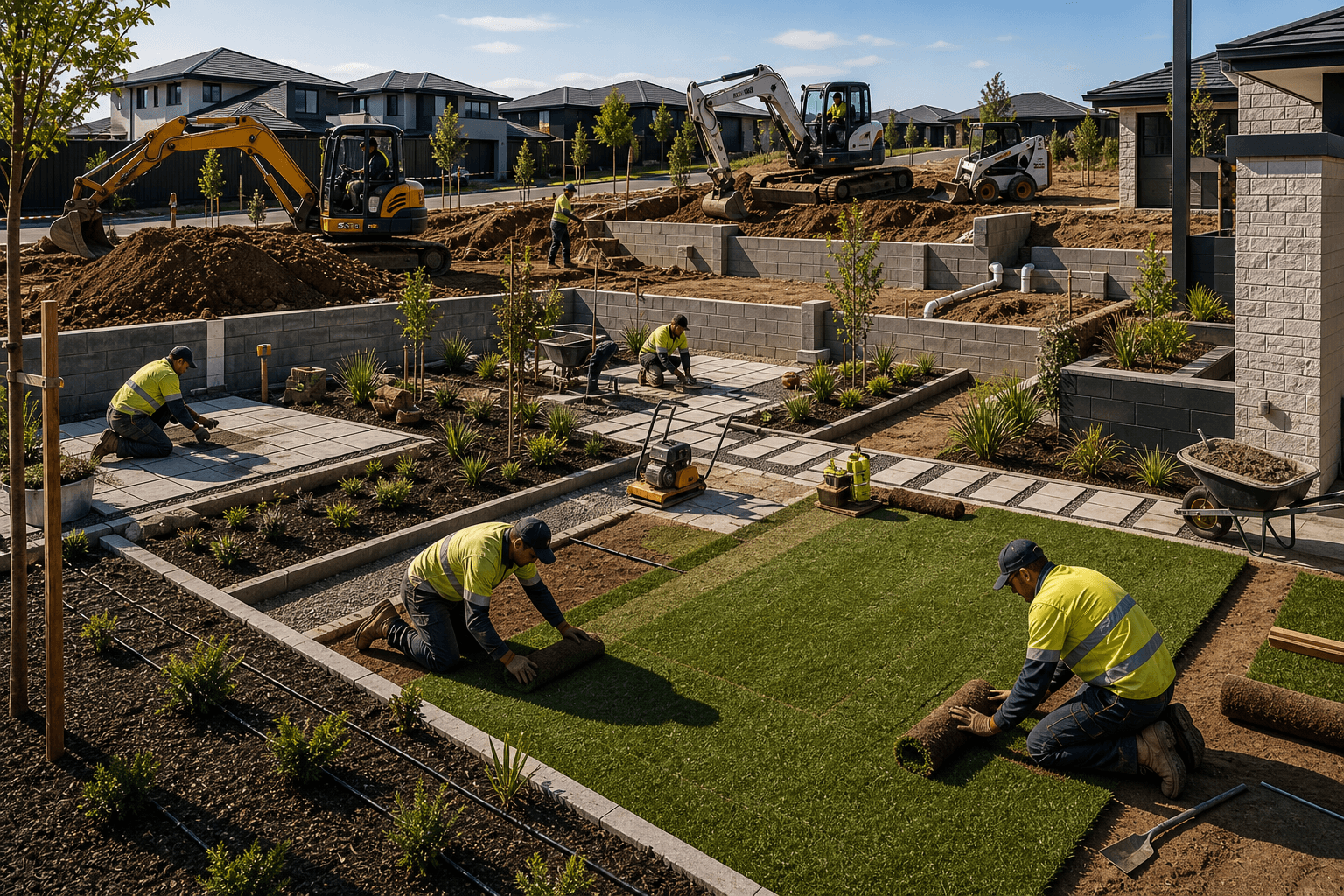
A yard with a shape to it already is a different job to a bare block. Most of the thinking goes into fitting new work around what is staying.
Sunken paving, rotted sleepers, spent lawn and buried rubble pulled out and carted off, so the ground underneath can be reset.
Leaning timber sleeper walls swapped for concrete sleeper or block, with drainage put in behind them this time.
Lifted or sunken brick paving relaid on a proper base, or replaced where the old surface has had its day.
Worn lawn stripped and the ground re-graded, then turf and sprinklers chosen for the shade a mature garden throws.
Old boundary fences replaced with as little disturbance as possible to the beds grown up against them.
Old lines traced, cleared or rerun, so new surfaces are not laid over ground that stays wet.
Ground opened up, trimmed and made ready once the old yard is out of the way.
Take on one corner of the yard or hand over the lot. Our landscaping services cover either, and for blocks nearer the centre of town there is landscaping in Gawler.
A tree in one of these gardens is usually the reason the yard is bearable in February, and it is also the thing that limits where new work can go. Roots reach out well past the edge of the canopy. Cutting through them to make room for a footing is how a healthy tree ends up dying two summers later.
We map where the root zone really sits before the design is settled, then keep machines and digging off it. Where a path or a patio has to cross that ground, it can often be built up over the top rather than cut into, which costs a little more in base material and saves the tree.
Some trees are worth designing the whole yard around. Others have outgrown the block or are sitting on the drains. Whether one can come out at all is worth checking before a design is drawn, because losing it changes the light and the shade everywhere else.
Nearly every yard here has had a landscaping job done in it before. Some of that work still earns its place. Some of it is holding the rest back.
Brick paving that has sunk or lifted is rarely a problem with the bricks. The bedding sand has washed out from under them, or the base was thin to start with, or water has been running through it for years. Lifting the same bricks and relaying them on a base built properly gives back the look you already have, without the movement.
Sound bricks, pavers and rock get stacked aside and used again where they suit, as edging, a garden path or the face of a low wall. That saves a load going out and ties the new work back to the house. Broken concrete and rotted timber leave by the load rather than being buried in the back corner for somebody to find later.
An old path or slab in the wrong place is often the biggest single line in a renovation. Breaking it up, loading it and carting it away takes machinery, and how fast that happens comes down to what can get down the side. It is worth pricing early. A checklist for preparing a site covers what we look for before any of it moves.
The walk around an established yard is mostly this conversation, and it gets easier once you know what each thing costs you to keep.
Anything structural that is still doing its job, and anything that would take years to grow back.
Anything failing, sitting in the wrong spot, or making the rest of the yard harder to put right.
Houses of this age were not built with a machine in mind. The side of the house is often the tightest part of the property, and there is usually a rainwater tank, a meter box or a settled garden bed already in it. That gap decides how the whole job runs. We measure:
Once the gap is measured we pick gear that fits it. Narrow tracked machines and powered barrows get through openings a bobcat will not, and boards go down over anything we drive across. Often the practical answer is to lift a fence panel out for the week.
Where there is no route through at all, the job gets planned that way from the start. Material comes in bagged rather than loose, waste goes out the same way, and the timeline allows for it. Access also drives the staging. On a tight block, our notes on making the most of a small backyard are worth a look before the layout is fixed.
An established yard rarely gets done in a single run, and it does not have to be. What matters is the order.
Anything involving digging happens before new surfaces cover that ground over.
Walls, steps and edges set the shape everything after them is built against.
Paving, paths and the driveway, once the ground beneath them has settled.
Boundaries close up once machinery no longer needs to come through them.
Soft work can wait a season without holding up anything in front of it.
Each stage gets left tidy and usable rather than parked as a building site.
Staging lets you watch the first part behave through a wet winter and a hot summer before committing to the rest. The risk is running the stages in the wrong order and paying twice to lift what has just gone down. We map the whole yard once, then break it into pieces you can take at your own pace. An outdoor entertainment space is a common one to start with, and there is a case for that in what reworking a yard does for an older home.
Our excavators, bobcats and trucks are kept at Mannum and Waterloo Corner, and this end of town is on the regular run.
Streets change character within a couple of hundred metres around here. Blocks up on the rise are covered under landscaping in Gawler East, and newer ground either side of town sits closer to landscaping in Evanston or landscaping in Willaston.
Usually. We work out where the roots actually run before the design is settled, keep digging off that ground, and build paths or paving up over the roots rather than cutting through them.
No. Anything sound is stacked and reused where it suits, as edging, a path or the face of a low wall. Broken concrete and rotted timber go out by the load.
It changes the method rather than stopping the job. Narrow tracked machines and powered barrows get through gaps a bobcat will not, and lifting a fence panel out for the week beats carrying everything by hand.
Yes. We map the whole yard once so the stages fit together, then build in the order that avoids paying twice to lift something. Drainage and levels first, planting last.
It depends what is there. Keeping sound paving and healthy trees saves money and years of growth. Keeping something already failing tends to cost more, because the new work has to be built around it and then redone.
We walk it with you, sort out what is worth keeping, and put together a staged plan and a price for the rest. The visit costs you nothing.