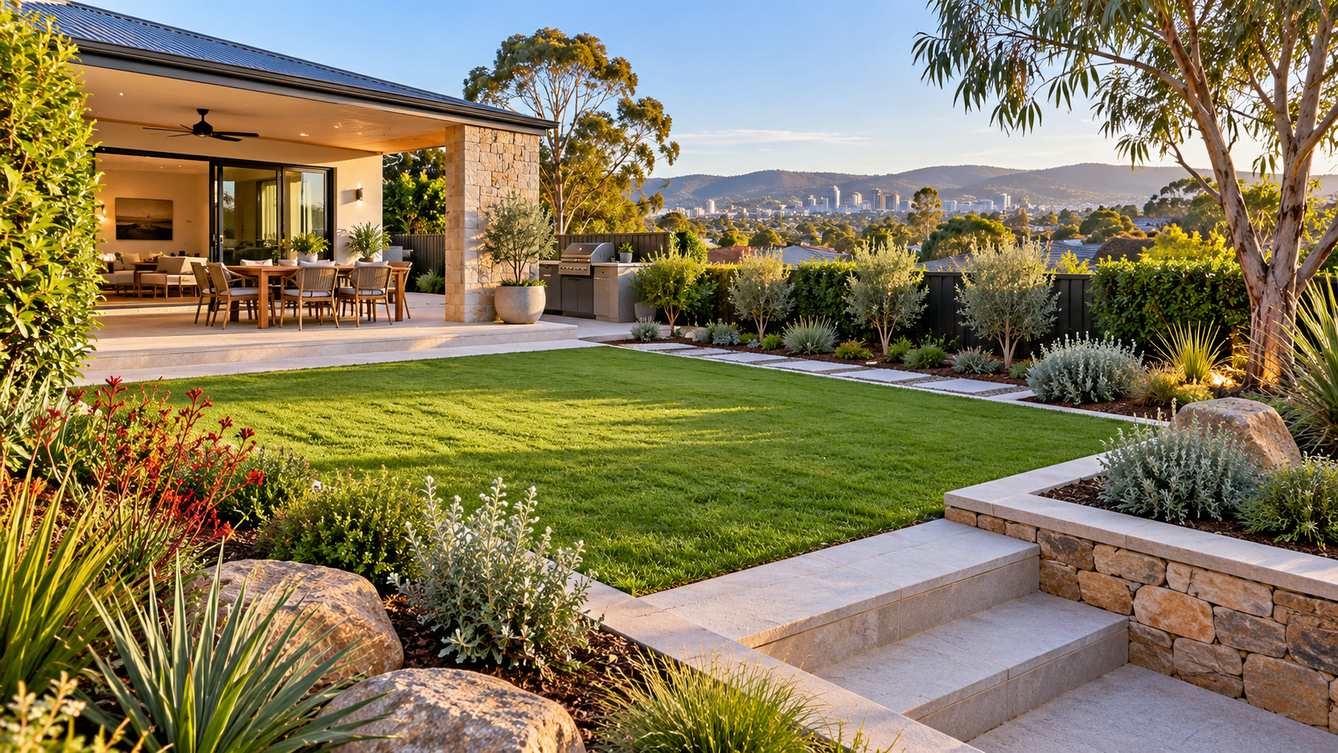
If you own a home in Adelaide, you know the challenges you will face when planning a lawn. Hot, dry summers, limited rainfall, and water restrictions can make your lawn care harder than expected. That is why many local homeowners are drawn to the never-ending debate.
Natural grass vs artificial turf, which is better, especially long-term?
Both options can work well, but they suit different Adelaide homes, budgets, and lifestyles. Some homeowners want a soft, living lawn that cools the yard. Others want a low-maintenance surface that stays green through summer.
The key is to look past the first impression. Since you are thinking long-term, you should also consider other factors like water use, maintenance time, long-term costs, comfort, and property presentation. With the right information, you can choose a lawn that works for your Adelaide home over many years.
Understand Adelaide’s Lawn-Growing Conditions
Adelaide is the driest of all capital cities in Australia, with hot and dry summers, intense UV exposure, and high temperatures. This creates obvious challenges for natural turf, causing living grass to brown, thin out, or become dormant.
You will also need to think about the quality of your soil, which is typically a mix of sand and clay. While some Adelaide properties have sandy soil that drains too fast, others have heavy clay that holds water and restricts root growth. Both soil types can affect your lawn’s health.
Water use restrictions can also limit your ability to irrigate the lawn, especially during dry periods. Considering this helps you make a more informed decision when it comes to the natural grass vs artificial turf debate.
What Are Natural Turf and Artificial Grass?
As the name suggests, natural turf is living grass. Common varieties for Adelaide homes include couch, kikuyu, and buffalo. These grasses can handle local conditions when the soil, sunlight, and watering plan match the property.
Artificial grass is a synthetic surface made to look like a real lawn. It usually includes polyethylene fibres, backing material, joining tape, infill, and a prepared base. It does not grow, so it does not need mowing or fertilising.
The main difference is simple. Natural turf needs regular care, while artificial grass requires correct installation. Most professional residential landscaping services in Adelaide will offer both options, including other add-ons like paving, edging, retaining, drainage, and garden beds.
Upfront and Long-Term Costs Compared
The cost difference between natural grass and artificial turf starts with installation. Natural turf usually costs less upfront. You pay for soil preparation, turf supply, laying, and early watering. This makes it attractive for larger lawn areas.
Over time, natural turf brings ongoing costs. You may need watering, mowing, fertilising, pest control, aeration, top dressing, and patch repairs. These costs can shoot up during dry seasons.
Artificial grass costs more at the start. The project needs excavation, base preparation, compaction, weed matting, joining, edging, and installation. Plus, if you want a quality product, you might need to pay more upfront.
The long-term savings come from lower water use and maintenance. You do not need regular mowing, fertiliser, or seasonal lawn repairs. When comparing natural grass vs artificial turf, you should look at the total cost over five to ten years, not just the installation price.
Maintenance Requirements Over Time
Natural turf needs regular care. You need to mow, edge, water, fertilise, aerate, and manage weeds or pests. During Adelaide’s summer heat, you may also need deeper watering and seasonal care to keep the lawn healthy. This can suit homeowners who enjoy gardening. It can also suit families who want a cooler and softer living surface.
Comparatively, artificial grass needs less work. However, you will still need to remove leaves, brush high-use areas, rinse pet zones, and clean spills. It is not maintenance-free, but it removes many weekly lawn tasks.
If you are still on the fence about this, speaking with a residential landscaping service in Adelaide can help you understand both options clearly. They can help you select the right natural turf, improve soil, install drainage, or prepare a stable base for artificial grass. This helps your outdoor space stay practical and tidy over time.
Environmental Impact and Sustainability
Natural turf offers a few environmental benefits. For one, it supports small insects, helps cool outdoor areas, absorbs carbon dioxide, and allows rainwater to move into the soil. Secondly, a healthy lawn can reduce dust and improve the comfort of your yard.
However, in Adelaide, the biggest concern is water use. Natural turf may need regular irrigation in summer, which can be tough if water restrictions apply. Some lawns also rely on fertilisers, herbicides, or pest treatments.
That doesn’t mean the natural grass vs artificial turf comparison is not one-sided. Synthetic lawns reduce irrigation and remove the need for mowing fuel or fertiliser. However, they can hold heat on hot days. They may also shed microplastics and create disposal issues at the end of their life.
Signs Your Property May Be Better Suited to One Option
Artificial grass may suit high-traffic areas, small courtyards, rental properties, even indoor pet areas, and homes with children. It can also help where natural lawns struggle under shade, poor soil, or limited water access.
On the other hand, Natural turf may suit larger yards, garden-focused homes, and areas where cooling and softness matter. It can be a better fit for people who enjoy lawn care and want a living outdoor surface.
You can consult a professional residential landscaping service in Adelaide. These experts will assess sunlight, drainage, soil, access, foot traffic, and your maintenance expectations before recommending an option.
Why Professional Installation Matters
Good installation affects the long-term performance of your lawn. Artificial grass needs proper excavation, base layers, compaction, drainage, joining, and edging. Poor base work can lead to dips, wrinkles, odours, and early wear.
Natural turf also needs correct preparation. Soil quality, levelling, turf selection, drainage, and early watering all affect how well the lawn establishes. Hiring an experienced residential landscaping service in Adelaide can help you prevent common problems before they start. Experts can help you plan a lawn that matches your property, budget, and long-term use.
Final Thoughts: Choose the Lawn That Fits Your Home
The natural grass vs artificial turf choice depends on your climate exposure, budget, lifestyle, and property conditions. Natural turf gives you a living, cooler surface, but it needs more care. Synthetic lawn gives you a clean, green finish with lower maintenance, but it needs quality installation and smart product selection.
Both options can work well in Adelaide when the planning is right. The best result starts with honest advice and proper site preparation. That’s where Leeman Earthworks comes in. We can help you prepare your site based on which lawn option you choose.
If you are looking for a new lawn, let’s talk!